Asia Pacific‘s leading platform for sustainable development

11. Sustainable cities and communities
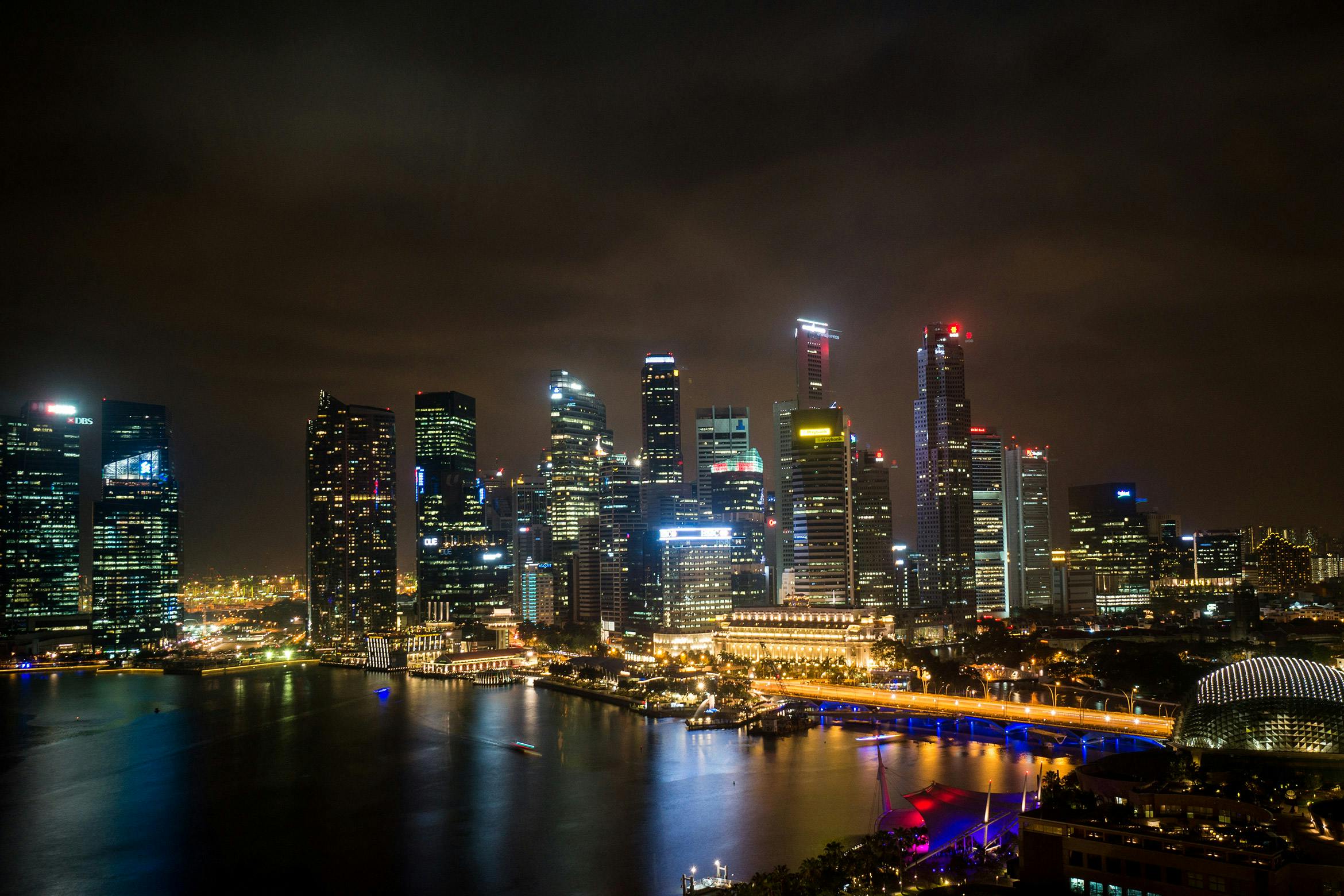
More than half of the world’s population now live in urban areas. By 2050, that figure will have risen to 6.5 billion people – two-thirds of all humanity. Extreme poverty is often concentrated in urban spaces, and national and city governments struggle to accommodate the rising population in these areas. Making cities safe and sustainable means ensuring access to safe and affordable housing, and upgrading slum settlements. Sustainable development cannot be achieved without significantly transforming the way we build and manage our urban spaces.
Read our stories to learn more about SDG Goal 11: Sustainable cities and communities





SDG 11 Sustainable cities and communities is supported by ABB
News

On recent visits to Japan and South Korea, Indonesian president Prabowo touted ambitious renewable energy plans in pursuit of energy security. Analysts say that the slow take-up of clean energy by state utility firm PLN still needs to be addressed.

Policy & Finance
Taiwan moves to secure plastic supply, expand reuse drive amid Middle East-linked disruption
Middle East supply disruption sparks panic buying in the island, prompting government to boost ethylene output and promote bag reuse schemes.

Corporate Responsibility
Asia demonstrates least transparency on AI safeguards for workers: report
Only 7 per cent of more than a thousand firms surveyed in the region are using artificial intelligence with adequate safeguards to help workers adapt to the technology’s impact, according to new analysis by AI Company Data Initiative.

Policy & Finance
Critics call US–Indonesia trade deal ‘extractive colonialism’ over mining, fossil fuels
Activists warn a new US-Indonesia trade deal could accelerate mining, deforestation and fossil fuel use, with weak, nonbinding environmental safeguards.
Opinion

Corporate Responsibility
Trade and sustainability go together as Trump’s tariffs target forced labour
The Trump administration's aggressive use of trade law to address labour issues could better the lives of migrant workers across Asia. Companies will have to rigorously scrutinise their supply chains for signs of forced labour.

The global surge in oil prices due to the Strait of Hormuz closure threatens to deplete the Philippines’ fund that helps provide subsidies for fuel used by off-grid communities. A transition to more renewable energy offers benefits.

Food & Agriculture
Women farmers are the first defenders of a warming Southeast Asia
Countries can improve the lot of its women farmers by improving whose names land is registered in, who signs contracts, receives credit and training, and sits in the room when climate‑risk maps are drawn.

Food & Agriculture
The war in Iran could create a fertiliser shock, risking global food prices and farming
Around a third of globally traded urea passes through the Strait of Hormuz and importing countries are less self-sufficient than they appear.
Policy & Finance
AI can propel women forward – or set them back further
Videos

Exclusive
Tune in to this webinar where our guest speakers discuss the region's plastic crisis, the state of play on the Global Plastics Treaty and circular economy strategies for businesses.

The impact documentary exploring Asia's mounting waste crisis – and its solutions – is now streaming exclusively for Eco-Business subscribers.

In the latest episode of the Climate Tech in Asia series, we speak to Breakthrough Energy and Green COP about what the shifting geopolitical landscape means for the climate tech ecosystem in Asia.

Carbon & Climate
More forest protection and financing needed in 13th Malaysia Plan, say environmental groups
NGOs urged the government to improve forest data transparency by making maps of protected areas publicly available, and to channel funds to frontline communities living near forests.
Podcasts

Carbon & Climate
Jeffrey Sachs: China is unequivocally the world’s climate power today. Asean’s opportunity is next.
Exclusive
The economist and president of the UN Sustainable Development Solutions Network told the Eco-Business Podcast how China’s green industrial and financial capabilities can help accelerate Southeast Asia's transition to net zero.

The head of waste management non-profit Ocean Recovery Alliance tells the EB Podcast that recycled content mandates will drive the circular economy better than caps on virgin plastic production. Brands should be pressured more than petrochemical producers to phase out unnecessary plastics, he says.

Green Buildings
Are our climate targets too weak or too ambitious? Hang Lung Properties’ sustainability chief John Haffner
Having "stretch targets" can spur innovation, says the sustainability chief for one of Hong Kong's largest real estate firms in the latest episode of "On the frontlines". He also shares why the firm has chosen to publish the draft of its net zero plan for open discussion of its climate targets.

A new report predicts Hong Kong could lose one quarter of its wildlife to new developments. WWF Hong Kong conservation head Dr Bosco Chan and Kadoorie Farm and Botanic Garden's Dr Stephan Gale tell the EB Podcast that developers must build in ways that protect nature and bolster climate resilience.

Receive the latest insights daily or weekly.
Strategic Organisations